DailyPay On-Demand Pay
- 4.7
- Rating
- 1.00M
- Installs
- Free
- Price

 Analysis by App-foxy
Getting paid can feel strangely disconnected from the work that created the money. DailyPay On-Demand Pay is designed for that gap: it is a finance app from DailyPay Inc that lets eligible workers access earned wages before the normal payday. I found the idea easy to understand, but the practical experience depends heavily on how your employer handles payroll and whether your wages are already available inside the service.
That distinction matters from the beginning. This is not a general budgeting app, a bank account replacement, or a way to borrow an unlimited amount of money. Its useful role is narrower and more specific: it can give you earlier access to pay you have already earned. For someone facing a bill before payday, that can be meaningful. For someone trying to build long-term financial stability, it is better viewed as an occasional cash-flow tool rather than a permanent solution.
What DailyPay feels like for a first-time user
The app is free to download, carries an Everyone age rating, and has been available since December 7, 2018. Its current version is 44.0.0 and it supports Android 9 or later. Those details make it accessible to a wide range of phone users, although eligibility for the actual wage-access service is a separate question from whether the app installs successfully.
You May Also Like

 Blood Strike: 2.5 Anniversary
Blood Strike’s Loadouts Turn Every Drop Into a Tactical Gamble
A close look at Blood Strike’s custom loadouts: how fast access to signature weapons reshapes its battle royale rhythm, rewards preparation, and narrows the gap between fights.

 Pandora - Music & Podcasts
Pandora’s Music Is Easy to Start, but Harder to Recover
Pandora’s strength is its low-effort path from a seed to a station. Its weak spot is how much confidence it asks you to place in connection, setup, and quiet recovery.

 8 Ball Pool
 Is Built on Rivalries, Rematches, and Routine
A close look at the rivalries, rematches, shared routines, and unanswered safety questions that turn a quick pool match into a persistent mobile community.

 Samsung Music
’s Quiet Strength Is Playing What You Already Own
Its reach comes less from spectacle than from dependable access to a personal library. That simplicity is both the app’s strongest retention engine and its ceiling.

 AccuWeather: Weather Radar
AccuWeather Review: A Quick, Clear Forecast for Everyday Decisions
For everyday plans, the best forecast is the one you can understand quickly. AccuWeather makes rain timing, radar, and local conditions easy to act on, with a few trade-offs.

 Hill Climb Racing
Why Hill Climb Racing Still Turns Crashes Into One More Run
A tiny car, a bumpy hill and one more upgrade: Hill Climb Racing keeps resurfacing because its simple chaos makes every near-miss feel personal.
More From Our News Desk



DailyPay has attracted a large audience, with over a million installs and a 4.7 average from around 215 thousand ratings. I would not treat those numbers as a promise that every worker will have the same experience. Earned-wage access is tied to employment and payroll arrangements, so the strongest part of the app for one person may not be available to another.
My first recommendation is to approach the app with one practical question: is my employer connected to DailyPay, and are my earned wages visible yet? If the answer is yes, the service can be straightforward. If the answer is no, installing it will not turn an ordinary payroll arrangement into instant access.
The app makes the most sense for people whose income is regular but whose expenses do not wait for payday. A late utility bill, a necessary trip to work, groceries near the end of a pay cycle, or an unexpected household expense are realistic situations where earlier access may help. It is less suitable for discretionary spending that you repeatedly cannot cover, because frequent early withdrawals can make the next payday feel smaller and create a cycle of catching up.
What happens before the first useful result
After installing DailyPay, I would expect the important work to be account and employment verification rather than browsing a large collection of financial tools. The app needs to connect your use of the service with the employer and payroll information that determines whether earned wages can be displayed. For that reason, the details you enter should match your employment records closely.
Take a moment to check the employer name and the personal information you use during setup. A small mismatch can create avoidable frustration, especially if you are trying to solve an urgent problem. I would also keep access to the email address or phone number associated with your employment records available, since account verification commonly becomes the first point where a rushed setup slows down.
The most reassuring way to use the app is to set it up before an emergency, not while standing at a checkout or waiting for a bill deadline. That gives you time to understand whether your account is recognized and whether wages appear during a normal work period. If the app does not immediately show usable earnings, that is a reason to inspect the employment connection and timing rather than repeatedly tapping the same request.
One useful habit is to separate three ideas in your mind: wages you have worked for, wages currently shown as available, and money that has reached your chosen destination. Those stages are easy to blur together when you need cash quickly. DailyPay’s value depends on the transition between them, and each stage can involve its own timing.
How to reach the first successful action
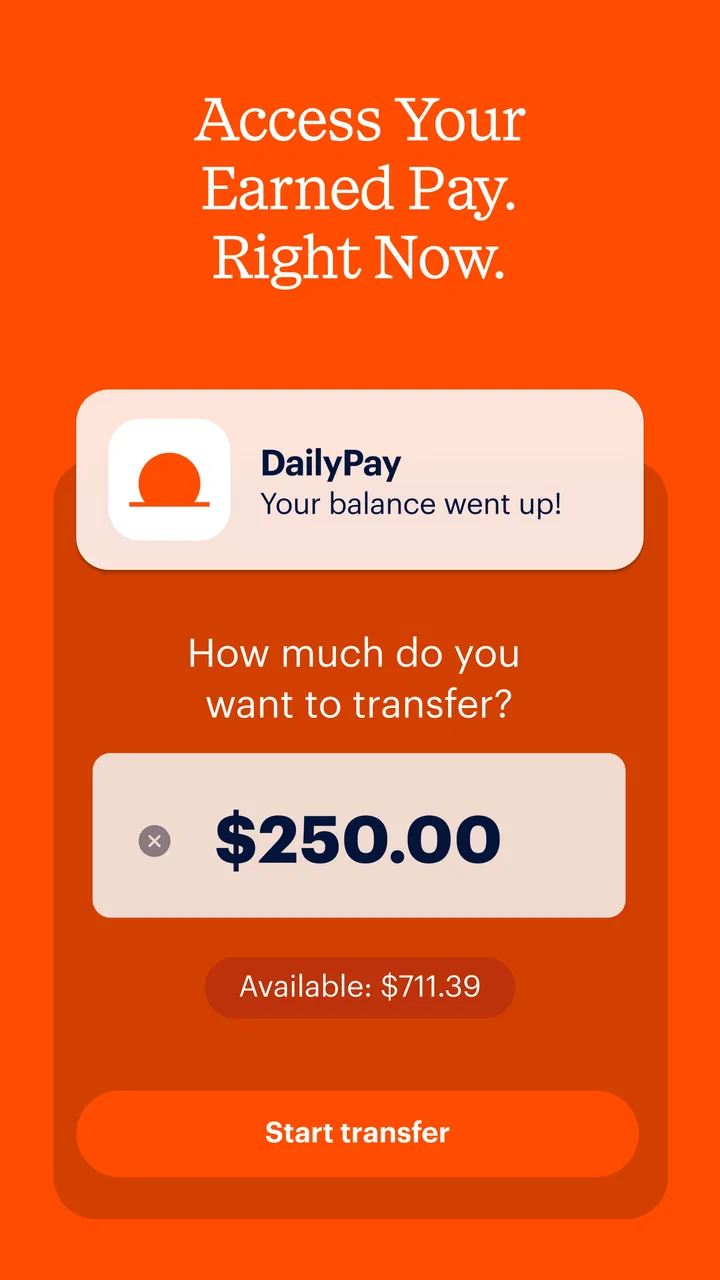
The first meaningful success is not simply opening the app. It is seeing an available earned-wage balance and completing a transfer or access request that you understand. I would begin by checking the balance calmly, confirming that it reflects a recent work period, and reviewing the destination and timing shown before proceeding.
For a first attempt, a modest amount is more sensible than trying to move the maximum immediately. That approach lets you learn how the process fits your payroll cycle without making the following payday unexpectedly tight. It also gives you a chance to notice how quickly the money arrives and whether the destination you selected is convenient for your everyday needs.
A realistic example would be a worker who has completed several shifts but still has days to go before payday. A necessary expense appears, and the worker opens DailyPay to check whether those completed shifts have become available. If the balance is present, the worker requests only enough to handle the expense, then leaves the rest for the regular payroll deposit. The app has done its job without turning the entire pay cycle into a series of small withdrawals.
That workflow reveals one of the service’s less obvious trade-offs. Earlier access can reduce the stress of a particular day, but it can also hide how much income remains for the normal payday. I recommend treating the displayed available balance as a planning signal, not as extra money. It is part of the pay you are expecting, simply accessed at a different point.
Before confirming any action, read the screen carefully instead of assuming every transfer works identically. Timing, destination, and any applicable terms should be clear to you before you continue. If you are comparing the app with waiting for payroll, include convenience and timing in the comparison, not just the amount you receive.
Confusion that can make the app seem broken
The most common misunderstanding is expecting all wages from the current pay period to appear immediately. Earned wages generally need to be processed through the employer’s payroll information before the app can reflect them. Recent work may therefore take time to show, and the visible amount may not match your own estimate of every hour worked.
Another source of confusion is assuming that installation equals eligibility. DailyPay is an employment-linked service. A person can download the app successfully and still find that the relevant employer connection is not available or that the account needs additional verification. That is not the same thing as a phone compatibility problem.
I would also avoid comparing the app’s available figure directly with your gross pay. The amount you expect from a shift and the amount that can be accessed early may be affected by payroll processing and other account details. A lower visible balance does not automatically mean your hours disappeared; it means the app is showing what it can make available at that point in the process.
Timing is another area where expectations need to stay realistic. “Before payday” does not mean every request arrives in the same way or at the same moment. When money is urgent, I would review the delivery information shown in the app and avoid waiting until the last possible minute. DailyPay can improve flexibility, but it should not be treated as a guarantee that a payment will solve an immediate deadline without preparation.
If your employment changes, payroll details change, or you stop working for a connected employer, the experience may change as well. The app is not independent of that relationship. Keeping your account information accurate and checking the employment connection is more useful than assuming a previously available balance will always remain available.
Where it differs from ordinary alternatives
The usual alternative is to wait for the regular payroll deposit and manage expenses around that date. Waiting costs nothing in the sense that you are not asking for earlier access, but it offers less flexibility when a bill arrives mid-cycle. DailyPay’s advantage is precisely that timing flexibility, provided your earned wages are visible and your situation qualifies.
A bank overdraft or credit card can also cover a short gap, but those options may involve borrowing rather than accessing pay already earned. That difference is important. DailyPay may feel more appropriate for a one-off timing problem, while a credit product can be more useful for a planned purchase that you can repay under terms you fully understand. Neither should be chosen casually when the underlying issue is that regular income does not cover regular expenses.
A budgeting app serves a different purpose altogether. It can help you plan bills, track spending, and see patterns over time, whereas DailyPay focuses on access to earnings before the normal payroll date. I would use budgeting tools to decide whether an early withdrawal is genuinely necessary, then use DailyPay only when the timing problem remains.
This is also why I would not recommend the app to someone who wants investing, savings automation, detailed spending analysis, or broad banking features. DailyPay is more focused. Its strength is the bridge between completed work and the next payday, not a complete personal-finance dashboard.
Small habits that make the experience safer
My first practical tip is to establish a personal limit before you need the service. Decide what kinds of expenses justify early access and what kinds do not. Without that rule, the convenience of seeing available wages can make everyday purchases feel easier to approve, even though the money will still be missing from the regular payday total.
My second tip is to check your upcoming fixed bills before requesting anything. If rent, transportation, or a scheduled payment depends on the next normal deposit, leave enough money untouched for those obligations. This simple check turns DailyPay from an impulse button into a cash-flow decision.
Third, make your first use a low-pressure test. Confirm that your employment connection works, observe the balance during a normal pay period, and learn the steps before an urgent expense appears. That is a more reliable introduction than installing the app for the first time when you have only minutes to spare.
Fourth, keep a record of what you accessed early. You do not need a complicated spreadsheet; a note with the amount and the reason is enough. This makes it easier to understand why the next payday is lower than expected and helps you notice whether early access is becoming a recurring substitute for a workable budget.
Finally, protect your account as carefully as you would any finance app. Use your own device, review account messages, and do not rush through verification because you are worried about an expense. The convenience is only useful if you remain confident about where your information and money are going.
Who should use it, and who should skip it
I can recommend DailyPay to an eligible worker who occasionally needs to smooth the space between completed shifts and the regular payday. It is especially appealing when the alternative is a late payment, an avoidable overdraft, or borrowing for a short-lived timing problem. The app’s focused purpose makes it easier to understand than a broad financial product with many unrelated tools.
I would be more cautious if your income varies sharply, your work hours are difficult to predict, or you already rely on early withdrawals every pay cycle. In those cases, the app may relieve today’s pressure while making the next pay period harder. A conversation with an employer, a budget adjustment, or a longer-term financial plan may be more useful than repeated access to wages ahead of schedule.
I would also skip it if what you really need is a complete money-management system. DailyPay will not replace a spending plan, emergency savings, or careful debt management. It can be one piece of a financial routine, but it should not be mistaken for the routine itself.
My closing view after using it
DailyPay On-Demand Pay is a practical finance app with a clearly defined job. It can make earned wages available before the normal payday, which is valuable when the problem is timing rather than a lack of income. The setup is most successful when you verify your employment details carefully, wait for earned wages to appear, and begin with a small, deliberate request.
The app is free, and its broad adoption and 4.7 average suggest that many users find the concept useful. Still, popularity does not remove the need for discipline. The central trade-off remains simple: money accessed earlier is money that will not arrive in the same way on payday.
My honest recommendation is to install it only with a specific purpose in mind. Test the employment connection before an urgent situation, understand the balance shown, and use early access as an occasional bridge. The best result is not merely getting money sooner; it is solving the immediate problem without creating a bigger one on payday.
FAQs for DailyPay On-Demand Pay
01What is DailyPay On-Demand Pay and how does it work?
DailyPay On-Demand Pay is a financial service app that allows employees to access their earned wages before the traditional payday. Once connected to your employer, you can see your available balance in real time and transfer the desired amount to your bank account or pay card. This offers flexibility and financial control without waiting for the official payday.
02Is DailyPay secure to use for my financial transactions?
Yes, DailyPay is designed with security in mind. It uses advanced encryption to protect your personal and financial data. Additionally, the app complies with financial regulations and standards, ensuring your transactions are safe and confidential. Users can trust DailyPay to handle their data with care and security.
03Are there any fees associated with using DailyPay?
DailyPay typically charges a small fee for each transaction when you transfer money from your earned wages to your bank account before payday. However, the exact fee structure can vary based on your employer’s agreement with DailyPay. It's important to review any applicable fees within the app before making a transfer.
04Can I use DailyPay if my employer is not partnered with them?
Unfortunately, you cannot use DailyPay if your employer is not partnered with the service. DailyPay requires integration with an employer’s payroll system to provide on-demand access to wages. You may want to discuss the benefits of DailyPay with your HR department to see if they can consider partnering with the service.
05How quickly can I access my money through DailyPay?
Once you initiate a transfer through the DailyPay app, the funds can be accessed almost immediately, depending on your bank’s processing times. Typically, transfers are processed within seconds to minutes, providing quick access to your earnings when you need them. This rapid access helps users manage expenses without delay.
Pros
- Fast access to earned wages.
- Secure and user-friendly interface.
- No fees for standard transfers.
- Supports multiple payment methods.
- 24/7 customer support available.
Cons
- Limited to participating employers.
- May encourage impulsive spending.
- Instant transfers incur a fee.
- Requires stable internet connection.
- Some features may lag occasionally.

DailyPay On-Demand Pay
Gallery